Monday, October 14, 2019

The War on the Truth:Two Women’s Eyewitness Accounts

Many Americans believed that President Obama’s election in 2008 was the sign that a post-racial America had finally arrived. Despite the 17% increase in hate crime in 2017, far too many Americans just can’t believe that racial hatred really could be the catalyst to mass murder, Nazi protests, and white supremacy. Not here. Not now. Not us.
Then Mr. Trump came to the podium and the words fake news came billowing throughout the social network. He proclaimed that those white supremacists and neo-Nazi in Charlottesville were “good people.” And a new war on truth was born…again.
That brings me to two truth tellers and their recent testimonies to what really happened to them and to the world from which they came.
Madeleine Albright and Michelle Obama come from different generations and different continents; however, both have much in common: notably, overcoming virulent hatred stemming from racism. Both spoke their truth with undying patriotism to the United States: Ms. Albright on the international stage as “Madam Secretary” and Ms. Obama on a national stage from the White House — a house slaves built (her ancestors to be unambiguous).
These two women have a message for Americans. Beware. Ignorance is not bliss. There is no such thing as alternate facts; events happened or did not happen. Words were said. Actions were taken in churches, mosques, and on the streets of Charlottesville. Mr. Trump’s litany of bullying tactics and ignorance ranged from claiming Mexicans were murders and rapists; Hispanic federal judges could not render justice; Muslims needed to be banned from entering our nation (because he saw them celebrating in New York after 9.11); Africans would never want to go back to their shithole countries’; Trump claims he had no knowledge of David Duke (the Grand Dragon of the KKK); and anyone who contradicted his opinions were merely echoing fake news.


Madeleine Albright’s newest memoir Fascism: A Warning is both a history discourse of villains, who wrap themselves in the cloak of nationalists, but her story concerns her own persecution from her native Czechoslovakia. Whether she is writing about her homeland, Russia, Turkey, the constellations of smaller satellites that once formed the USSR, or the less developed nations dotting South America, as well as the Middle East, Albright is clear how political corruption and vicious manipulation has led to dictators like those in Syria, North Korea and the Philippines to name but a few.
Ms. Albright’s most poignant metaphor deals with the attempt to burn to the ground the ethnic hatred that fed the fascism that shrouded the world’s landscape which the Axis powers coveted. After WWII ended, she argues that the ideology of hate seemed to be scorched on the earth’s surface; however, the roots of paranoia run so deep that after a generation those very seeds begin to break through the crusty soil. President Truman, she notes, spoke of this, “Hitler is finished, but the seeds spread by his disordered mind have firm root in too many fanatical brains.” Her warning is that those ideologies are not only growing, rather they are in full bloom today. One needs only to look to the tragedy in New Zealand this March to see this on horrific display.
Albright contends, Donald Trump is the latest manifestation of how today’s dictators operate. They begin, as Hitler and Mussolini did, by stoking the ambers of fear and discontent among their masses, then slowly they neuter the media and control public discourse. The judicial system is co-opted or maligned. Any challengers are bullied, and in the case of the worst of the monsters — imprisoned, made to mysteriously disappear, or simply boldly assassinated even within embassies existing for their protection. These so-called presidents have one refrain: they claim that they alone can save their nation from the invasion of those who seek to do harm.

Ms. Obama’s memoir is not a warning — far from it — it is clearly a Becoming. She passionately writes of the love of her parents, her upbringing on the Southside, her dedication to a cause worth fighting for and eventually meeting a man of such capability and ambition that she decides to take a road she feels is wicked and wondrous: politics. Naturally, her concerns about her children being raised in such a world worries her greatly, and make no mistake, she does give witness to the dangers of being the first Black family to lead our nation. The peril her family faces equates to the constant security essential to protect her family and the President. From what you may ask? From the same bigoted adversaries who have never let go of the Original Sin of racism. Something this nation has failed to fully come to accept, and from which it has never made reparations.
Ms. Obama’s most telling moment to me was the description of the bullet lodged in the impenetrable window of the First Family’s upstairs living area in the White House. However, bulletproof glass could not stop Donald Trump, whom she can “never forgive” for the danger he so thoughtlessly created, since then candidate Obama was under Secret Service protection far before others because death threats were ubiquitous. Trump’s ignorant insistence that Barack Obama was not born in America created countless malevolent conspiracies all cordoned off under the umbrella of birtherism. Trump, along with his dutiful messengers at Fox News, conjured a sick lie that put the Obama’s in harm’s way.
__________________
In the years before it became obvious what Adolph Hitler’s plans of genocide were, many Germans and Austrians claimed that they never imagined such a thing was happening. 
The antidote is knowledge. Some of it first-hand, eyewitness truth, but for those sitting far from imminent danger in their homes today that knowledge comes from the journalists who cover the events unfolding before them.
However, the campaign of misinformation, whether it comes from foreign adversaries or home-grown propaganda, is real and threatens our republic and the civic discourse that makes America the “beacon of freedom.”
Above all, Michelle Obama and Madeleine Albright are optimists, but they remind the reader that turning a blind eye to the evil in the world does a free society great harm. These two women’s 

Friday, October 11, 2019

Lessons Germany and Austria Teach about the Sins of the Past

Ta-Nehisi Coates has written eloquently and persuasively about why America’s slaves helped build this nation and have paid a tragic price for their forced efforts, yet they have received nothing in return for their sweat, blood and tears.
So what does this have to do with Germany and Austria?
Having pleasure of just visiting these countries and speaking to those enlightened individuals who live in the two nations that were the setting of the Nazi’s holocaust, I have had my eyes opened. To cut to the chase, more than 70 years after the conclusion of WWII, the German people are still embarrassed and mortified about their involvement (or lack thereof) in the actions of Hitler and his diabolical concentration camps. So much so that, not once — but during three different grade levels — schools are focused on the history of Nazism that they allowed to occur.
I was told by our guide that when she was studying in America, she was amazed how many American flags were flown. This was startling to her because in Germany the flag is not ubiquitously waving. Patriotism to them means accepting their role in an unprecedented ethnic “cleansing” and making quite sure that future generations know the truth: the guilt lies within.
Contrast that to Austria — its neighbor. We Americans see “The Sound of Music” and assume that Austrians were like Captain Von Trapp: disgusted with the Nazi invasion of Austria. That couldn’t be further from the truth. In Austria, I was informed by numerous sources — the Holocaust is never taught in schools. In addition, Austria’s involvement with the Nazis and their blatant cooperation with Hitler is a mere footnote (if mentioned at all) in school. They want to have no ownership of what Austria did to all those murdered and persecuted in Austrian concentration camps like Mauthausen.
But the irony does not stop there. Due to the Marshall Plan and President Truman’s leadership, America and Allied forces spent millions reconstructing the bombed out cities and propping up German and Austrian economies. Who received the bulk of that money? Austria. Yes, the nation that denies involvement and claims they were victims of Hitler were one of the biggest receivers of US aid.
Another twist, Mauthausen concentration camp, which I visited, was considerably “sterilized” (save for pictures) by the Austrians, whereas the brutal truth of German camps like Dachau was evident to my eyes. Having seen both camps, the simple visual horror of both juxtaposed is visceral.
So what does this have to do with American slavery and the need for reparations?
I hate to state what I believe I have made obvious, but for the sake of clarity: we have for the most part acted as Austria. Jim Crow laws undermined for many blacks the purpose of the Civil Rights Acts in the 1960’s. I could go on and on: Red Lining, separate and unequal schools, institutional corporate bias — these are the legacy of slavery. Ghettoes, as I taught for years, were born of slavery, and drug dealing became one major avenue to economically escape poverty; only to lead to the mass incarceration of black men and the destruction of black family life.
Isn’t it about time, 400 years to be exact, since 1619 that we, who have prospered, take responsibility for the prosperity we have built as the “richest nation on earth?” One can debate the specifics of how and to what degree, but the why is not up for debate.
Unless, of course, like Austria, we claim that we were victims of the slave trade.

Monday, September 16, 2019

The Karla Peterson Effect


“Talk about a dream/ trying to make it real…” Bruce Springsteen’s lyrics that are the “ties that bind” a former teacher turned author to a veteran columnist.

This essay is one that Karla Peterson would never author about herself. I knew if the story ever got out, it would be up to me to write it. Why?

If you know Karla Peterson, even superficially as I do, you will learn that she is the personification of humility. This is contrary to some major newspaper columnists, for whom tooting their own horn is part of the gig. Not Karla.

As a matter of fact, when she interviewed me recently for her review of my newest novel, Karla told me that she really didn’t know the effect of her writing makes on the readers for the San Diego Union-Tribune—or the affect, for that matter. I was flabbergasted and I am planning on making sure that in just my small sample size—Karla Peterson moves mountains.

We met in unusual circumstances. I read her 2002 essay on the power and wisdom of Bruce Springsteen’s album The Rising, which was inspired by the tragedy of 9.11. I was planning on teaching selections from that album to my juniors at Mt. Carmel High School, and she wondered how I was going to present Springsteen and the entire horrendous topic to seventeen year olds who had just lived through it, albeit on the West Coast. At that time I realized, as the saying goes, that we were ‘of the same mind.’

As years passed, we kept in touch, and after I retired from teaching, she was kind enough to read and review my novels—even though they were self-published; that is what makes her “Effect” so amazing. Fast forward to July 23rd, the date she published her review of my latest novel Meet Me at Moonlight Beach—her headline: Author Writes a Love Letter to Encinitas. Needless to say it was very flattering. 

Within 48 hours, over 38 books sold on Amazon; the La Jolla Kiwanis Club asked me to speak to their members; Mira Costa College put me on a writers’ panel; and my reading at the local artsy shop Bliss 101 in downtown Encinitas was crowded with folks who had “heard the word” from Karla.

Then the unimaginable (for me, an indie writer without an agent or traditional publisher) happens. I call Barnes and Noble and plan to pitch my new book (since they did have a table of books with the sign: What Encinitas Is Reading!). Thinking I was just going to get another stink-eye from the mainstream bookseller as I have for 9 years, I am “shocked, shocked” to have the lovely Katie, the community Relations Manager, tell me “Mr. Pacilio, we already carry your books…and we have already sold some.”

“What?” is my first reaction, and that is followed by “How?”

To find the answer I race to the store to find Katie, who takes me to my books, filed under P in fiction. I catch my breath. I was an English teacher and the San Diego County “Teacher of the Year”; however, that means absolutely nothing to the publishing world. (And that is fair.) So to finally see my work on the shelves—well, it is a moment to remember. Then Katie politely says, “Would you like to autograph these copies?” My pen is at the ready. She even puts that green seal that read: “Autographed Copy.”

Then I ask the most important question: “How did this happen?” Katie’s response is that someone in the store must have read Karla Peterson’s column and realized what Karla herself told me, “I really enjoyed your book and I was pretty sure other people would, too.” So they purchased books from my distributer. We decide the books need to go on the aforementioned ENCINITAS table so folks can see it.

Before I leave, Katie asks me: “Would you like to speak here and do a book signing? I can order all your other books, too?” Would I? You bet I would! So thanks to “The Karla Peterson Effect” I will be speaking at the Encinitas branch of Barnes and Noble on Saturday, October 19th from 2-4 pm. Drop the mike.

Karla Peterson WOULD NEVER write a column about how much her opinion matters. So I figured it was about time somebody else did. Thank you, Karla, for helping me out of “these ‘Badlands.’”


Karla Peterson is a longtime San Diegan whose beats at the San Diego Union-Tribune have included TV criticism, pop-culture, Comic-Con and San Diego people and lifestyles. She has won awards for entertainment criticism from the American Association of Sunday and Features Editors. A graduate of San Diego State University, she has been with the U-T since 1985.

Robert Pacilio taught English from 1977-2010 and has now written four novels.

Monday, September 2, 2019

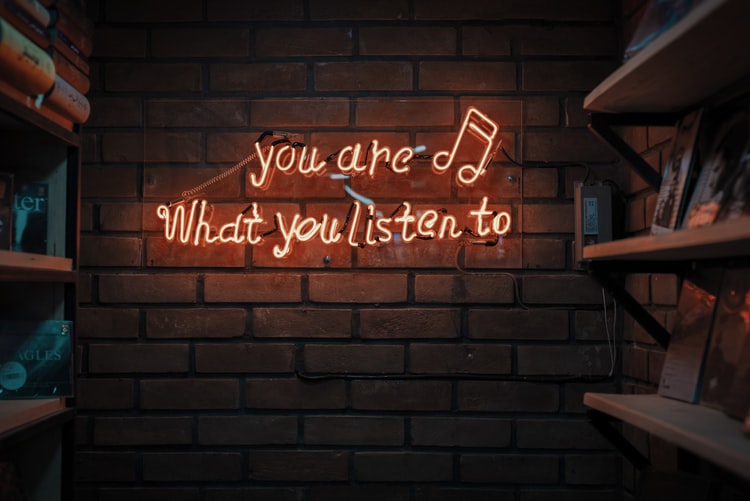
Teachers: 5 Songs to Play for Your Students NOW and WHY

Photo by Mohammad Metri on Unsplash


A long time ago, I thought that the first day of school was about the rules. That ended 25 years ago when I realized that there was no greater method to make the students believe that you, the teacher, were like one of the horrifying teachers in the film Pleasantville; if you have not seen the film — for shame! You have missed a film that captures the form of magical realism so “colorfully”…but I digress.
Music, you see, is the medium that teachers and students still have in common. It may be the last link a teacher has to the ‘kid culture’ — especially if you are over 40 years old (and still think Flock of Seagulls was a band that would become legendary). I learned that a song could speak to students much like it speaks to me and, without them knowing, create a literary bond.
That’s right — I said literary. For all you stubborn snobs who believe that only Dylan and his ilk of folk singers were the last of the literary luminaries, I have news for you. When you were following that Pete Seeger group down the Hudson River, the generation before you thought you and they were commie/ hippie/ Woodstock druggies. That generation looked at you “upstart crows” and dismissed you completely. So it is time to get off your high horse and recognize music is literature, even if “it’s still rock and roll to me.”
Here are 5 songs to start your teaching year.
First. Rise Against is a band and their anthem is a song entitled “Swing Life Away.” I would play it on Opening Day. Why? Because its message is that we all have scars, we all have fears, (even the teacher), and if we could just take a step closer to each other and reach across the aisle, we would discover that we have so much in common. It is a heart and soul melody that show the students that you care.[all grades/ all classes]
Second. Tracy Chapman’s “Fast Car” is the finest example of the vicious circle of poverty in America. It does not matter the color of one’s skin: poverty is poverty. Chapman’s song is focused on black circumstances, particularly a woman’s plight as her hopes to escape poverty vanish much like the symbolic and illusionary “Fast Car” that lured her long ago. Since America is recognizing “The 1619 Project,” the 400 years of slavery beginning with the Dutch slave trade of that year, this song speaks to the inherent injustice that is at the root of this nation’s Original Sin. { high school, English or Social Studies}

Third. The Beatles’ “Yesterday”is a compliment to Romeo and Juliet in that it is ‘Romeo’s Lament’ to his lost love, Juliet. Just listen to the words and you can hear how Shakespeare’s “star crossed lovers” surrender to a fate that they cannot escape, one that they do not deserve — one that continues today as lovers are torn apart by wars and drug lords that are interchangeable with the families of Verona. {high school preferably}
Fourth: Bruce Springsteen’s “41 Shots- American Skin” is a must when teaching the fate of Tom Robinson in To Kill a Mockingbird. Springsteen, inspired by the police shooting death of Amadou Diallo, warns his audience that “you can get shot just for living in your American skin.” For students living far from the inner city, or naĂŻve to the power racism and fear instills in all of us (even if we are afraid to admit it), it is an eye opener. After all, Harper Lee’s theme is that you “can’t understand a person until you walk in his shoes”…even when his shoes are stained with blood. { high school — try the video of the live performance; it is particularly chilling}
Five: In 1989, Bruce Hornsby warned folks of the upcoming disaster that is Global Warming in his song “Look Out Any Window.” Hornsby looks to the sky, the sea, and the landscape and sees just how much damage is being done. That same year Lester Brown and the World Watch Institute published The State of the World and warned of the calamity approaching faster than even Al Gore predicted in A Inconvenient Truth. As I type these words, the Brazilian rainforests are burning due to deforestation that is rooted in a mentality that deems profitability over sensibility. {All science teachers middle –high school should be on to this; I taught this in English as part of non-fiction literature}
There you have it. I know I have not included music from the last five years, but I could. As a matter of fact, that is probably my next essay. But for now, just remember this:


You cannot teach kids if you cannot reach them

Thursday, August 29, 2019

Teachers: 5 Songs to Play for Your Students NOW and WHY

Photo by Simon Noh on Upsplash
A long time ago, I thought that the first day of school was about the rules. That ended 25 years ago when I realized that there was no greater method to make the students believe that you, the teacher, were like one of the horrifying teachers in the film Pleasantville; if you have not seen the film — for shame! You have missed a film that captures the form of magical realism so “colorfully”…but I digress.
Music, you see, is the medium that teachers and students still have in common. It may be the last link a teacher has to the ‘kid culture’ — especially if you are over 40 years old (and still think Flock of Seagulls was a band that would become legendary). I learned that a song could speak to students much like it speaks to me and, without them knowing, create a literary bond.
That’s right — I said literary. For all you stubborn snobs who believe that only Dylan and his ilk of folk singers were the last of the literary luminaries, I have news for you. When you were following that Pete Seeger group down the Hudson River, the generation before you thought you and they were commie/ hippie/ Woodstock druggies. That generation looked at you “upstart crows” and dismissed you completely. So it is time to get off your high horse and recognize music is literature, even if “it’s still rock and roll to me.”
Here are 5 songs you want the students to hear:

Photo by Mohammad Metri on Unsplash
First. Rise Against is a band and their anthem is a song entitled “Swing Life Away.” I would play it on Opening Day. Why? Because its message is that we all have scars, we all have fears, (even the teacher), and if we could just take a step closer to each other and reach across the aisle, we would discover that we have so much in common. It is a heart and soul melody that show the students that you care.[all grades/ all classes]
Second. Tracy Chapman’s “Fast Car” is the finest example of the vicious circle of poverty in America. It does not matter the color of one’s skin: poverty is poverty. Chapman’s song is focused on black circumstances, particularly a woman’s plight as her hopes to escape poverty vanish much like the symbolic and illusionary “Fast Car” that lured her long ago. Since America is recognizing “The 1619 Project,” the 400 years of slavery beginning with the Dutch slave trade of that year, this song speaks to the inherent injustice that is at the root of this nation’s Original Sin. { high school, English or Social Studies}

Photo by Paulette Wooten on Unsplash

Third. The Beatles’ “Yesterday”is a compliment to Romeo and Juliet in that it is ‘Romeo’s Lament’ to his lost love, Juliet. Just listen to the words and you can hear how Shakespeare’s “star crossed lovers” surrender to a fate that they cannot escape, one that they do not deserve — one that continues today as lovers are torn apart by wars and drug lords that are interchangeable with the families of Verona. {high school preferably}
Fourth: Bruce Springsteen’s “41 Shots- American Skin” is a must when teaching the fate of Tom Robinson in To Kill a Mockingbird. Springsteen, inspired by the police shooting death of Amadou Diallo, warns his audience that “you can get shot just for living in your American skin.” For students living far from the inner city, or naĂŻve to the power racism and fear instills in all of us (even if we are afraid to admit it), it is an eye opener. After all, Harper Lee’s theme is that you “can’t understand a person until you walk in his shoes”…even when his shoes are stained with blood. { high school — try the video of the live performance; it is particularly chilling}
Five: In 1989, Bruce Hornsby warned folks of the upcoming disaster that is Global Warming in his song “Look Out Any Window.” Hornsby looks to the sky, the sea, and the landscape and sees just how much damage is being done. That same year Lester Brown and the World Watch Institute published The State of the World and warned of the calamity approaching faster than even Al Gore predicted in A Inconvenient Truth. As I type these words, the Brazilian rainforests are burning due to deforestation that is rooted in a mentality that deems profitability over sensibility. {All science teachers middle –high school should be on to this; I taught this in English as part of non-fiction literature}
There you have it. I know I have not included music from the last five years, but I could. As a matter of fact, that is probably my next essay. But for now, just remember this:
You cannot teach kids if you cannot reach them first.


Saturday, August 10, 2019

Blinded by Springsteen’s “Western Stars”

Photo: courtesy  Katy Leigh


On the evening of August 7th in a ‘movie house’ in Asbury Park, Bruce Springsteen and his wife Patti Scialfa witnessed the debut of a film Blinded by the Light, a true story, of a young man so enamored of the Jersey rocker and his E Street Band that his life was forever changed. Boy, can I relate.
Having taught English for 32 years, I found that one way I could nudge my students into an appreciation of literature and its powerful themes was to use songs, “a three minute record, baby” (as Springsteen reminds us in “No Retreat, No Surrender”). One particular Springsteen song from the 1980’s connected viscerally with my high school students: “The River.”
“The River” tells the story of young high school lovers whose passion leads to unexpected, let predictable consequences. Pregnancy, dropping out of school, a marriage of conscience, and the eventual regret these forlorn lovers feel would imprint on my high school students especially when the lovers eventually see their dreams fade away as deeply as the wrinkles that line their faces. It was a good lesson for seventeen- year olds…it is a lesson for us all.
“The River” may well have been one of the many songs in the Springsteen collection that propelled the new film Blinded by the Light; I don’t know for sure since Asbury Park is 3,000 miles from Encinitas, California where I pen this essay. But one thing I do know for sure: Bruce Springsteen has not lost his touch with his latest work: Western Stars.
Being authentic is one quality that writers understand to be essential. One either writes what one knows or seeks to find out that truth by going to the source. It boils down to understanding empathy and sympathy, and Springsteen’s thirteen songs have a little of both. They are told as vignettes of chorus and verse with Springsteen’s raspy voice holding its center. This is an album that only a writer of Springsteen’s stature can produce as the poet laureate of his medium, and with the enthusiasm of a youthful orchestra behind his melodies, he touches a nerve that makes one twitch.
And what, you ask does a (soon to be) seventy-year old Springsteen have to offer today? He has followed his Broadway life story chronicled from his autobiography Born to Run, with this album filled with characters facing their own mortality, and in many cases…all alone. These stories depict the evolution of Springsteen from a rollicking rocker to a wise sage, time travelling to those places west of the Mississippi where the wild horses, the movie stars and truckers roam. Wherever he takes us, we remind ourselves of the pain and joy that comes with age.
Springsteen’s stories begin with a wandering “Hitchhiker” who seems content with riding shotgun and appreciating the lives of those who trust him enough to take him anywhere down the road. Far more somber is a lonely truck driver often loses track of where he is, who he is, and what loves he has left behind. He’s reduced to calling himself “The Wayfarer.”
All is not doom and gloom. “Tucson Train” is a redemption yarn, the story of a man who has worked through “the pills and the rain” in an effort to prove to his past lover that all was “not in vain.” He is going to prove to her that “a man can change” as he is waiting for her to arrive “on the 5:15.”
Perhaps the most intriguing tale is the album’s title track “Western Stars.” His aging storyteller finds himself no longer a bit player in the western movies of yesteryear, but instead he’s milking the last of days of his B star fame, doing commercials for Viagra. He knows all he is good for is retelling the old story of how he was shot by John Wayne to bar hounds willing to pick up his tab. The songs goes farther though, as Springsteen gives homage to the old cowboys and the charros, the proud Mexican riders who Springsteen’s narrator insists are his brothers who “cross the wire and bring the old ways with them.” It is a bittersweet melody that one is drawn to despite the fact that the old cowboy knows his only hope is that when he wakes up in the morning “his boots are still on.”
Springsteen charts the sunrises and sunsets, some somber but some miraculous as he crosses Montana, California and Arizona. The most upbeat sunset appears when he saddles up to “Sleepy Joe’s CafĂ©.” The surf guitar and the accordion get the locals who show up at sundown to dance and “flirt the night away,” putting their hard day’s work behind them for at least a few hours before beginning anew the cycle of “an honest day’s work.”
The quietest, most sober song is whispered by a guitar player who has come “into town with a pocketful of songs”: the town, Nashville. His mission to land a contract in the town that makes musical careers come to life. Unfortunately, “Somewhere North of Nashville” is where this poor soul realizes he “just didn’t do things right.” He’s just another broken record, freezing in his car and utterly lost.
It is an authentic, panoramic view from atop hills in Montana at all those times one “Chases Wild Horses” only to dream about catching one and someday and riding her as “her hair flashin’ in the blue” is beyond reach.; like a wild horse, he’ll never lasso or tame her — those days over and done.
Photo of author:courtesy of Christa Tiernan (note: album covers)

These are not the songs I would teach to high school students. No. They are meant for those of us who have driven those El Caminos down Highway 5 for many a decade. When we were young, we were “Blinded by the Light” — nowadays, it’s time for us to look up to the night time stars that shine and take stock of who we are and what really matters in life.


Thursday, August 8, 2019

Economic Segregation: “Plague on Our Public School Houses”

I’ll make this clear as I can. There isn’t overt racial segregation. Economic segregation is the new “red lining.”
Before I explain why, let me tell you about Adam Lambert. I taught him along with my wonderful colleagues at Mount Carmel High School — a public high school. He excelled for all four years. He did not transfer to one of the charter schools for the arts, nor did he attend a private school for the rich. His success came from a state that equalized funding to districts, a district that embraced diversity, and a faculty that worked their collective rear ends off. Remember that, please, as I tell you why this is the exception, not the rule.Author Jonathan Kozal made that clear in his landmark work Savage Inequalities, and Thurgood Marshall and William O. Douglas stamped it as de facto segregation in the 5–4 Milliken v. Bradley decision.
“Justice Thurgood Marshall’s dissenting opinion stated that:
School district lines, however innocently drawn, will surely be perceived as fences to separate the races when, under a Detroit-only decree, white parents withdraw their children from the Detroit city schools and move to the suburbs in order to continue them in all-white schools.[11]
Justice Douglas’ dissenting opinion stated that:
Today’s decision … means that there is no violation of the Equal Protection Clause though the schools are segregated by race and though the black schools are not only separate but inferior. Michigan by one device or another has over the years created black school districts and white school districts, the task of equity is to provide a unitary system for the affected area where, as here, the State washes its hands of its own creations.”
Schools get what the district’s income basis is based on property values in most states. Poor areas get less per pupil. Rich districts get more. Milliken v. Bradley set the walls up; a student cannot cross district boundaries. That’s why Detroit inner city kids can’t jump to the suburban schools that are well funded.
So that’s that. The documentary Waiting for Superman tried to make all this clear. California, is one of the few states that funds all schools equally, unlike say…New Jersey which spends four times as much on Cherry Creek schools vs. Camden schools (Kozal evidenced).
In states that do not equalize per pupil spending (i.e. most states) there is no way out of poor performing schools except to do one of the following: move to a better neighborhood, go to a private school, a charter school, a religious school, or just home school. That’s it. Every one of those school choices draws away from the public schools the funding, the families, and the energy that those families provide.
And why do families abandon the underfunded, underperforming public schools in their area? Well, it’s obvious. They want what’s “best” for their children. Most can’t afford to move into a “better” district because of the rising cost of housing, so some desperately lie and say their children live with a family member that may live in a nicer district. Some choose a religious school. Some keep them home. Some parents have children who are not “gifted” to qualify for a charter that specializes in STEM, STEAM or whatever the newest acronym is. *( See update in following paragraph) They certainly can’t afford the private schools — which now cost as much as what college charge — 20K-40K…a year.
*Update 8/8/19: Regarding Charter Schools: it is noted that these are public schools and they do open their doors to all students. Some schools are impacted by a flood of eligible students and they are forced to only accept a percentage. In many states, the funding for these schools varies so I am not arguing ALL charter schools are draining funds or students from the public schools; some charter schools offer the only opportunity for a better education since the public schools in a particular state are so under funded and underperforming.
Vouchers? Not a chance. First, states won’t even equalize funding to schools in the first place — what makes anyone think the voucher will be so lucrative? Second, Milwaukee tried it. No dice.
Ah, but even states that have equalized Average Daily Attendance (ADA) like California have a way to get the rich districts richer — it’s called foundations. One for the band, the sports teams, the arts…they fund raise to make up for a lack of funding. That money (done with stipends.) can even go to paying for semi-teachers (not on payroll) who teach music lessons, coach lacrosse, etc..
So what does one do to make public schools better?
First, Betsy Devos and the Trump administration need to be sent packing.
Second, a national standard of ADA must be set and adjusted with inflation.
Third, the private schools will always be there; but states must change the method of distributing funds. All public school districts must be equalized in financial resources. The Federal Government will have to put money into the states’ coffers and enforce the law. This means that states like New Jersey must equalize; therefore, they must reduce funding to the prima donna districts. (They will still have foundations so don’t shed a tear.)
Fourth, rather than privatize failing schools (based on dubious test scores*), either bulldoze them, renovate them, and re-populate them with teachers who receive a 20–40% pay hike in their annual salary. Believe me; good teachers will transfer if the money, safety, and facilities are improved.
Last but not least, Unions must agree to have teachers fired who are not performing or under-performing. I say Unions because they cannot ask for the moon and not expect to give up something big. In this case, below average teachers. I know some will howl at this suggestion — too bad. The students and parents have been howling at the wind for too long. If you really want to make public schools better, it will take more than money.
You can’t change the Supreme Court’s decision. You can’t ban private schools. And you must not allow charter schools to be the ‘private’ option for those who “qualify” because of the student’s aptitude for math, dance, science, music etc. Instead, the public schools need to step up their game on all these
Adam Lambert had these advantages. He should not be the only American Idol. All our kids deserve the spotlight.