Saturday, June 15, 2019

Teachers: Students’ Moral Compasses Are Spinning;. All the standardized testing will never measure character and citizenship.


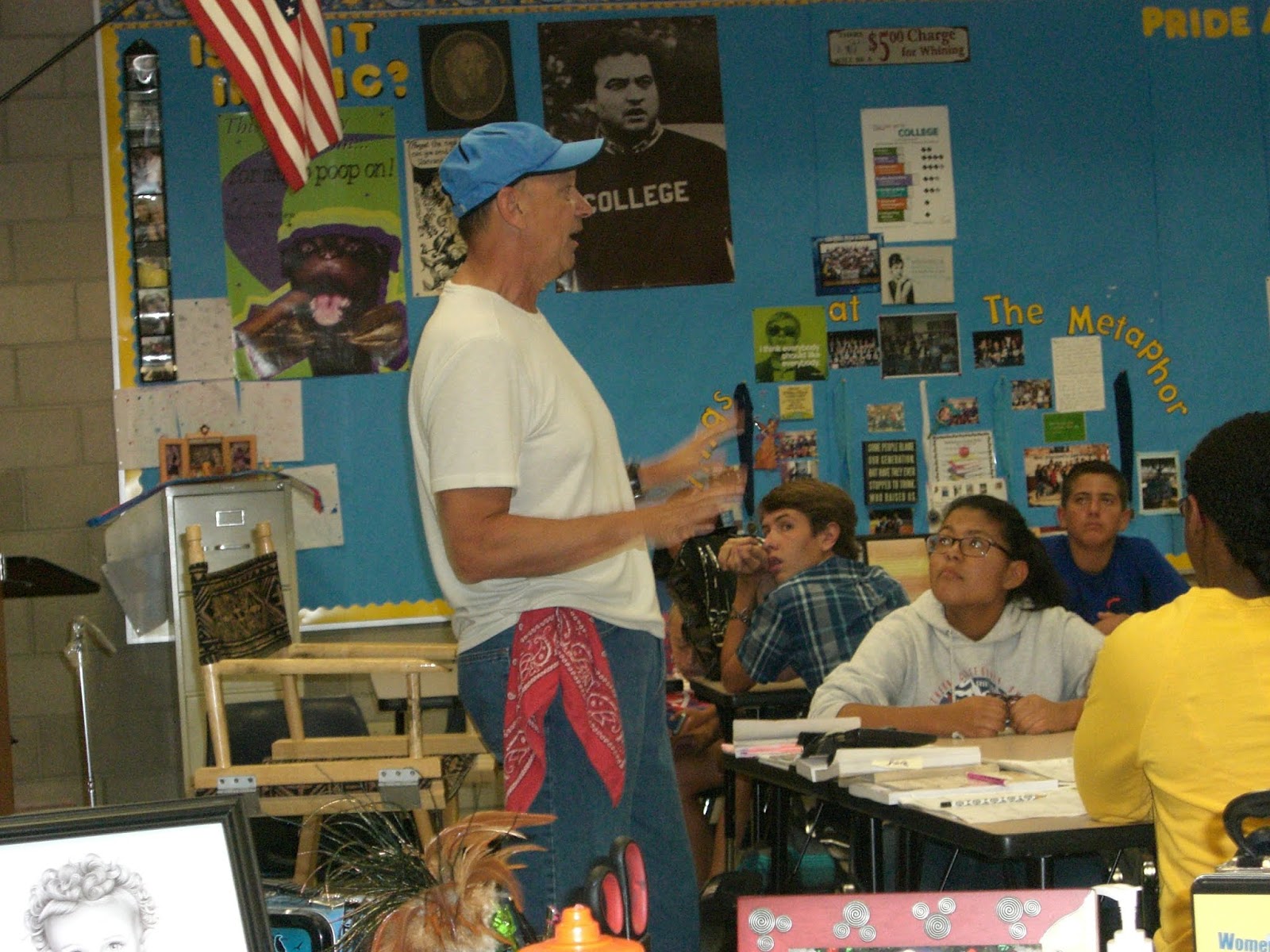
I was interviewed by a panel of esteemed teachers and administrators in 1998 since I was nominated to be the San Diego County’s Teacher of the Year. “What did I teach,” the asked. My answer: “Invisible things.” Naturally, they were perplexed. So they asked for specifics. I replied, “Compassion, tolerance, honesty, envy, jealously, loyalty…you know, the stuff we are supposed to teach.” The wisdom of Atticus Finch seemed to fit the occasion. He told his daughter, “Scout, in order to understand a person, you have to step into a man’s shoes and walk around in them.” That’s what I taught; five shows a day, five days a week, 32 of the most passionate years of my teaching life.

So it with high regard that I express kudos to writer Paul Barnwell, the author of The Atlantic’s recent article regarding the failure of schools to teach character; he made it abundantly clear that: “The pressures of national academic standards have pushed character education out of the classroom.” (7/25/2019)

How bad has it gotten? Barnwell gives many examples, but one quantifies the situation, “…according to a 2015 Council of the Great City Schools study, eighth-graders spend an average of 25.3 hours a year taking standardized tests.” That comes as no surprise to me since my 32 years as a high school teacher in San Diego evolved into a manic panic of administrators behaving like testing cheerleaders for week-long testing; prepping for testing; testing to meet the minimum standard to graduate (which scares the heck out of the kids whose first language is not English), testing for State Exit exams, etc.. I think you get the picture.

What is at stake for the school and its district? In “good” schools/ districts (typically ones with parents of financial means) — it’s all about bragging rights. In “poor” schools/districts (best described as “poorer, ghetto schools”) —closure or survival; thus being taken over by an bean counting state administrator, who often is well versed in dollars and adverse to educational quality. Naturally principals get the hook, as well as head honchos at the district office in charge of curriculum.

And let’s not forget the real estate market. God forbid a school’s score card of proficiency does not fall too far below “the schools with comparable income status” — then it’s RED ALERT! Buyers will opt out of that district’s boundaries and head for private schools (if they have the deep pockets). It is a realtor’s worst nightmare—financial flight from their home, home on their range.

What does all this testing mean to students? Ironically, virtually nothing. As long as the student passes a very basic test in language that the aforementioned second language students distain the scores have no affect on students. None. Zero. As a matter of fact, the teachers never see the results until those students are long gone. The parents get a letter from the state about the math/ language skills of Joey or Jane and promptly deposit it in recycling (after their children say it has no effect on GPA, college admissions, yada, yada). And the kids are right. Fact is, many of the brightest students blow it off because they are stressed out and tested to death; they prefer to concern themselves with an AP test down the road. Administrators then beg them to not opt out. Please!

So what is forsaken for all this testing, not to mention all the money spent on the companies that charge the various states for their “latest-got-to-have-it” tests? Simply put — teaching character, ethics, a moral code that points True North.

Ask any teacher who has taught 5 to 10 years and they will confirm what I am saying. I don’t have time or patience to document the problem of testing any more than I have (read The Atlantic article if you doubt me). I refer teachers who are somewhat experienced because they are the ones who have realized what has been stripped away; the newbie teachers simply are battered down with expectations and are running like crazy to keep up. 

So what to do, you ask?

As the San Diego County “Teacher of the Year,” let me introduce some the characters whose values I insisted my students hear from and contemplate: Ma and Tom Joad from The Grapes of Wrath, who refuse to allow ‘the regular folk to be beaten down by ‘the man’; Mockingbird’s Scout and Atticus Finch, who witness the outrageous miscarriages of justice in the Deep South; Holden Caulfield, as he tries to be the Catcher in the Rye, watching poor souls falling from buildings; Gatsby’s only real friend Nick Carraway, who sees the bloodshed caused by careless, thoughtless rich fools; the ‘slave’ Jim who guides Huck Finn’s adventure as his true father figure; Our Town’s heroine Emily Webb, who realizes, much too late, that people just take life for granted; and the wide array of unforgettable characters of Bruce Springsteen’s “American Skin.”

These authors and their thematic motifs served me well, and to this day, my students remember those lessons, especially Don McLean’s eulogy to an America that has “gone dry” in his classic song  “American Pie.” 

When I retired, my former students implored me to write down what I taught and how I taught it. So I did. Meetings at the Metaphor Cafe is now taught is several school districts. But many teachers will say that they don’t have the time. My answer: make the time. Spend the minimum time giving tests and more time guiding the students though the harrowing experience of being a teenager in this cynical world we inhabit. (If you are a teacher, parent, or administrator, I’ll send you a free copy…really! Just Google it…I’ll even pay the shipping. I’ll do anything to get this ship sailing True North.

After all, it is the invisible things that are the heart and soul of what students remember all those years later.

Monday, June 3, 2019

Aaron Sorkin Meets Atticus Finch in the New Jim Crow Era


Paying it forward. That is what one of my former students, Dr. Frank Lopez, did for me. He knew my wife and I were visiting New York City, and he made sure we would be attending Broadway’s To Kill a Mockingbird. Why it mattered so much to Dr. Lopez is that it was the novel I taught him (and other high school students for 32 years) and because his son Lex would be reading Mockingbird that year. So it was that Harper Lee’s novel and Horton Foote’s Academy Award winning screenplay was brought to life in Aaron Sorkin’s new play, and my wife and I along with his family were witness to the courtroom drama.

I was reminded that evening by Dr. Lopez what an impact the heroic Atticus Finch had on him, as well as the tragedy that befell Tom Robinson because the topic of social justice was a motif in my classroom, sometimes dubbed “The Metaphor Café.” As we leaned forward in our seats that evening to hear Atticus Finch once again battle the ignorance “of a tired old town,” I looked at two generations of students—a doctor and his son, and wondered how this new version of Mockingbird would be received.

However, this Atticus Finch, played by Jeff Daniels, is not portrayed as a shining white knight; rather he is a simple country lawyer used to handling land disputes and wills. He discovers he is powerless against the forces of ignorance that prevails then…and now.

For those who do not recall the details, Finch takes Tom Robinson’s case, knowing that both were beat “before they started”—victims of the 1930’s racism that is all too familiar today. I will not repeat depressing statistics of black incarceration or the systematic injustice in America’s courtrooms that is evident to this day, despite what some felt President Obama’s election could rectify—namely, a post-racial society. One man’s election, no matter how historically significant, has not changed intransigent racist attitudes.

With that in mind, Aaron Sorkin’s version of To Kill a Mockingbird challenges its audience that is far too complacent with the outcome of Harper Lee’s disheartened Atticus Finch and bullet-ridden, doomed-from-the-start, Tom Robinson, to imagine a scenario in which the Finch’s maid Calpurnia redefines the novel’s theme.

At the outset, Atticus reminds his children, Scout and Jem, and generations of American students, that one has to “step into his shoes” to understand a person. Nobel in words, but Calpurnia makes it dramatically  clear to Atticus that “understanding” the virulent hatred and violence that racism breeds in the antagonist Bob Ewell and the vast majority of Maycomb, Alabama’s white citizens (and by extension the Deep South) justifies their ignorant behavior. Jeff Daniels, in an interview, explains that his character is “an apologist.”   

Yes, Atticus’ defense of Robinson is courageous and an act worthy of admiration. That is undebatable. His motive is equally compelling as he tells his daughter Scout his personal reason for defending an obviously innocent man so many others attack because of the color of his skin, “You have to learn to live with yourself before you can live with other folks.”

However, in both the novel and the film, Atticus stops short of physical action, other than standing guard at the courthouse when the town’s racist men seek to take justice into their own hands with a noose. Atticus symbolically stands at the door holding only a book which will not stop the henchmen. What stops them? Guilt. Guilt that is stirred up by his children who remind the men how much they owe their father and what he has done for them in their time of financial need. The voices of children who stubbornly refuse to move reminds the angry men that they are still human.   

Sorkin decides it is time for his hero Atticus to respond, in deeds and promises of future actions. Atticus fights back, physically, with the threats of Bob Ewell—something he refuses to do in the novel because he argues that letting Bob Ewell blow off steam and save face ”would save Mayella another beating.” This is a pivotal moment and Sorkin’s signature that it is time for Atticus to put a stop to one man’s threats.

Mayella Ewell, the sexually abused daughter, is trapped in a lie and a society that views her as white trash. She, too, is a victim—a mockingbird who, like Robinson, sings out, only to draw the hunter’s attention. And hunt they do. I’m reminded of a line that Horton Foote added to the film absent in the novel: Atticus turns to Jem, who has just witnessed his father being ridiculed, and says, “Son, I’d like to keep you from all the ugliness in the world…but that’s just not possible.” Indeed.   

And that is just the point Sorkin drives home, as deeply as Boo Radley plunges a kitchen knife into the heart of the novel’s antagonist. “We’ve got to stop this right here and now,” Atticus Finch demands to a faceless jury. “It has gone too far.” Aaron Sorkin is making that same argument; dignity demands that ignorance no longer be tolerated. Not now. Not ever again.

Metaphorically, this play is about just how long this nation will remain apologists, enablers of racist policies of The New Jim Crow, documented by the distinguished writer Michelle Alexander. History will not look kindly to this jury if America continues to show malice towards those mockingbirds that “sing their hearts out for us.” This Atticus Finch aims to show us the way and reminds us, again, “That it is a sin to kill a mockingbird.”
When the curtain came down that evening, and the audience stood, my eyes locked on to Dr. Lopez. There was so much to say and so little time to say it. So this is my time. I hope when Dr. Lopez’s son Lex engages in a class discussion about the characterization of Atticus Finch that he remembers words really do matter, but actions speak louder than words.  

Monday, May 20, 2019

The Most Important Question for Students (all of us): WHY?

I was invited into an American literature class by a young, wonderful teacher, Ms. M. She had graciously asked me to say a few words to her “kids” since I had been her teacher so many years ago.

I looked around at the circle of students who had their Great Gatsby novels and notebooks opened on their desks. I asked them a simple question: Why did Gatsby want Daisy to leave Tom and fall in love with him? Why would she? Why…why do fools fall in love? (I explained that was a song…well, actually, I sang it…a little off key — they laughed.)

Nice. They had a sense of humor.

Silence. I waited them out. Tick-tock. Then I asked them another question: Why didn’t each of them ask that question of Gatsby and Daisy? I said something to the effect of “Do you know what makes people so things crazy things when they are, or think they are, in love?”

Now these students are top notch. They know exactly what happened in the novel: spoiler alert — it does not end well for old Jay Gatz. They may know what all the symbolism is about; the “eyes of Doctor T.J. Eckelburg” looking down on the “Valley of Ashes” etc. But silence befell them at the word WHY.

Before I go back to that “teachable moment,” as all the pedagogy textbooks refer to it, (in other words, it is what Oprah calls the “Ah-ha Moment”), let me say this. History and English teachers particularly must stop asking what, when, and where. That’s kid stuff. Primary grades go there. When middle/high school teachers are fishing around for that information — that’s just a box to quickly check off to make sure that the students have done their “homework.” It has nothing to do with why those students are studying Gatsby, or WWII, Watergate, Mockingbird, or what’s bothering Holden Caulfield.

Those questions are great for Journalism 1 classes. The question How is the stuff of science and math — perhaps business. Those teachers want kids to know how things work, first and foremost. Not that Why does not matter to those teachers, but first –how does it work?

Some teachers too often “dumb down” material and hope that that will suffice. Teachers are pushed, for all sorts of reasons, to make the job a true/ false, scantron, there-is-one-clear-answer message. It takes less time, less effort, and I know that these teachers are bogged down with too many students, too many standards, too many problems in the students’ homes, and too little money in their bank account. I get that. But the American taxpayer who needs to invest much more in public schools (more on that in another essay) must expect higher level thinking from the young people coming up. Lord, we know these kids will face some challenging issues in their lives and what the problem is, well that’s obvious — why it exists and how to solve it is another matter altogether.
“Why? Because if you don’t ask, you don’t dance.”

Okay, I am off my soapbox, let’s get back to that classroom.

So, finally I ask one young man, much to his surprise, this question, “I am sure there is someone here at school that you would love to go on a date with, right…no names…but someone?”

Now I really had the full attention of the class. He stammered something, but it was reduced to a nod. I then turned to a young lady next to him and asked her the same thing. Laughter ensued. Nervous laughter. They were having a good time. I had strummed a chord that they all related to that song. Then I said to both of them, “I bet you can’t explain why you are enamored with that person?” One student laughed and said that is a vocabulary word on their test. More laughter. I followed up, “Seriously, think about it. That person you two are thinking of, or persons (more laughter) doesn’t know you from Adam or Eve, right? What do you know about them? Why in the world are they…of all the charming, smart, fun, and attractive people in your life, that special one? The one you would do something crazy for?”

A beat. I looked around. “Each of you is thinking of that person right now. Maybe a prom date? But the question is why them? It is irrational, isn’t it? Here are some of the heartbreak kids: Romeo. Juliet. Harry. Sally. Rick. Elsa. The head and the heart don’t always sing the same song. Gatsby loves Daisy because of what she was or seemed to be — a dream. But what she is, in reality, is careless, selfish and spoiled. Remember what Nick, your trusty narrator, explains: Daisy and Tom were careless people who crash into people and then leave it to others to clean up their mess as they escape with their money.

The room was quiet. Then I said, “I encourage each of you to follow your hearts. Yes, it may get bruised. Remember this: Don’t be careless with people’s hearts, but don’t be shy either. Why? Because if you don’t ask, you don’t dance. And that is where the fun is.”


Photo by author


Wednesday, May 15, 2019

Teachers: The Soundtrack of Your Students’ Souls


What you can learn from their songs

This week the passing of my math colleague, Joe McEachron made me revisit our poignant conversations about reaching all students—framed in our lexicon this way: “We’re in the Kid Business.” Joe was a master, and his sudden passing has reminded me of a debate we had many moons ago about music and how to relate to the 35 or so pupils we faced five times a day.

“Bob,” Joe said, “their music sucks!” Joe had a delicate way with words.
“Joe,” I said, “we can’t think like that. We sound like grumpy, old men.”

He looked at me and didn’t need to say what he was thinking, even though we were in our mid-forties. It was true then that some ‘modern’ music had made a turn for the worst. I mean “Me So Horny” was a song one of my students identified with in a speech he made to the class. I quizzed him regarding the deeper significance of this choice, much to his chagrin. He was speechless and embarrassed; he came up with another song within the week. But the point I was making, and a lesson it taught me and my students, was that music was the one thing this baby-boomer teacher and his teenage students have in common. It is something we can talk about.

I told Joe that I could prove him wrong; that not all their songs suck. So one assignment I created was

called “Your American Identity.”  I asked each student to present a song that spoke to whom they are, wished to be, or perhaps how they saw their world. I required a power point slide with the lyrics. (Yes, I insisted that songs have meaning beyond “I can grind with my dance partner.”)

What the students in my American literature classes produced would have made Joe proud. Of the hundreds of presentations I watched, several remain ingrained in my memory. One was a girl named Lauren, who was generally quiet, but as she pushed play, I smiled at the lush melody of “What the World Needs Now (Is Love Sweet Love).” Jackie DeShannon, the singer, was part of my generation. That mattered not. What mattered was the timelessness of that song’s theme to a generation at least twenty years removed.

Naturally, most songs I heard that were new to me. However, another ‘ah ha moment’ came when another red haired young girl named Brandi cued up Jewel’s song “You Were Meant for Me.” It is a sad, perhaps to some, melodramatic ballad of a couple breaking apart, with the woman wishing it did not have to be. Notably, a young boy in class named Ryan asked her, “Do you think the girl in the song ever got over him?” There was a hush in the room. Brandi’s eyes watered as she faced the class, “I don’t know. What do you think, Mr. Pacilio?”

What I thought was this: it “meant” something to all of them. It touched a nerve. Heartbreak. Something everyone feared.  

One student seated in the farthest seat from me named Chris was often aloof in class. Perhaps he felt that he may not have the confidence to chime in to a conversation about Twain or Fitzgerald, and maybe he felt like some of the music I played in class was so “old school.” It didn’t resonate with him—Bruce Springsteen, Billy Joel, TLC, Don McLean, etc., it just wasn’t his kinda jam. So when he got up to address the class he softly admitted: “You know, I don’t really like some of Mr. Pacilio’s songs, and I looked and looked for a song that was more…me. And I just couldn’t find anything. So I went to my dad’s albums. I found this one song that just hit me.” He proceeded to play Joni Mitchell’s long ago indie hit “The Circle Game.” Its theme: “…we can only look beyond from where we came and go round and round and round in the circle game.”  To say I was surprised at the irony was an understatement. 

Oh, how I wish my dear friend Joe had been in my classroom that moment.

So the teacher learns from the students and the students get their chance to embrace the opportunity to express their view of life with all its twists and turns. It was the soundtrack of their lives.

Oh, Joe, I miss you, brother, and so do your former students. If I could choose a song to play for you, it would be James Taylor’s refrain: “Just yesterday morning, they let me know you were gone….” 

Goodbye, Joe. God Bless.


Thursday, March 28, 2019

Madeleine and Michelle: Speaking the Truth about Power


Madeleine Albright and Michelle Obama come from different generations and different continents; however, both have much in common: notably, overcoming virulent hatred stemming from racism. Both spoke their truth with undying patriotism to the United States: Ms. Albright on the international stage as “Madam Secretary” and Ms. Obama on a national stage from the White House—a house slaves built, her ancestors to be unambiguous.

Madeleine Albright’s newest memoir Fascism: A Warning is both a history discourse of villains, who wrap themselves in the cloak of nationalists, but her story concerns her own persecution from her native Czechoslovakia. Whether she is writing about her homeland, Russia, Turkey, the constellations of smaller satellites that once formed the USSR, or the less developed nations dotting South America, as well as the Middle East, Albright is clear how political corruption and vicious manipulation has led to dictators like those in Syria, North Korea and the Philippines to name but a few.

Ms. Albright’s most poignant metaphor deals with the attempt to burn to the ground the ethnic hatred that fed the fascism that shrouded the world’s landscape which the Axis powers coveted. After WWII ended, she argues that the ideology of hate seemed to be scorched on the earth’s surface; however, the roots of paranoia run so deep that after a generation those very seeds begin to break through the crusty soil. President Truman, she notes, spoke of this, “Hitler is finished, but the seeds spread by his disordered mind have firm root in too many fanatical brains.” Her warning is that those ideologies are not only growing, rather they are in full bloom today. One needs only to look to the tragedy in New 
Zealand this March to see this on horrific display.

Albright contends, Donald Trump is the latest manifestation of how today’s dictators operate. They begin, as Hitler and Mussolini did, by stoking the ambers of fear and discontent among their masses, then slowly they neuter the media and control public discourse. The judicial system is co-opted or maligned. Any challengers are bullied, and in the case of the worst of the monsters—imprisoned, made to mysteriously disappear, or simply boldly assassinated even within embassies existing for their protection. These so-called presidents have one refrain: they claim that they alone can save their nation from the invasion of those who seek to do harm.

Ms. Obama’s memoir is not a warning—far from it—it is clearly a Becoming. She passionately writes of the love of her parents, her upbringing on the Southside, her dedication to a cause worth fighting for and eventually meeting a man of such capability and ambition that she decides to take a road she feels is wicked and wondrous: politics. Naturally, her concerns about her children being raised in such a world concerns her greatly, and make no mistake, she does give witness to the dangers of being the first Black family to lead our nation. The peril her family faces equates to the constant security essential to protect her family and the President. From what you may ask? From the same bigoted adversaries who have never let go of the Original Sin of racism. Something this nation has failed to fully come to accept, and from which it has never made reparations. Above all, Michelle Obama and Madeleine Albright are optimists, but they remind the reader that turning a blind eye to the evil in the world does a free society great harm.

Ms. Obama’s most telling moment to me was the description of the bullet lodged in the impenetrable window of the First Family’s upstairs living area in the White House. Ms. Obama these windows never open for good cause. She laments that there is no fresh air. Even bulletproof glass could not stop Donald Trump, whom she can “never forgive” for the danger he so thoughtlessly (at best, sinister at worst) created, as even candidate Obama was under Secret Service protection far before others since death threats were ever-present. Trump’s ignorant insistence that Barack Obama was not born in America created countless malevolent conspiracies all cordoned off under the umbrella of birtherism. Trump, along with his dutiful messengers at Fox News, conjured a sick lie that put the Obama’s in harm’s way.

So these two women have a message for Americans. Beware. Ignorance is not bliss. There is no such thing as alternate facts; events happened or did not happen. Words were said. Actions were taken in churches, mosques, and on the streets of Charlottesville. Mr. Trump’s litany of bullying tactics and ignorance ranged from claiming Mexicans were murders and rapists; Hispanic federal judges could not render justice; Muslims needed to be banned from entering our nation (because he saw them celebrating in New York after 9.11); Africans would never want to go back to their shithole countries’; there were bad people on both sides of the riots in Charlottesville; he had no knowledge of David Duke (the Grand Dragon of the KKK); and anyone who contradicted his opinions were merely echoing fake news.

In the years before it became obvious what Hitler’s plans at genocide were, many Germans claimed they never imagined such a thing was happening. So many Americans believed that Obama’s election was the sign that a post-racial America had finally arrived. Despite the 17% increase in hate crime in 2017, far too many Americans just can’t believe that racial hatred really could be the catalyst to mass murder, Nazi protests, and white supremacy. Not here. Not now. Not us.

The antidote is knowledge. However, the campaign of misinformation, whether it comes from foreign adversaries or home-grown propaganda is real and threatens our republic and the civic discourse that makes America the “beacon of freedom.” These two women’s memoirs should be part of the curriculum  in every classroom in the United States, be it civics, American history, or sociology. This much I know: their life experiences are anything but fake news.

Robert Pacilio, the 1999 San Diego County “Teacher of the Year,” has authored “Meetings at the Metaphor Cafe” (YA) & “Meet Me a Moonlight Beach” (fiction).

Photo of Ms. Albright: Alex Wong/Getty Image North America 

Photo of Ms. Obama: (AP Photo/Jim Cole)

Sunday, February 17, 2019

A Guest Writer to the Metaphor Cafe: Rich Clark: A Tribute to his Civics Teacher

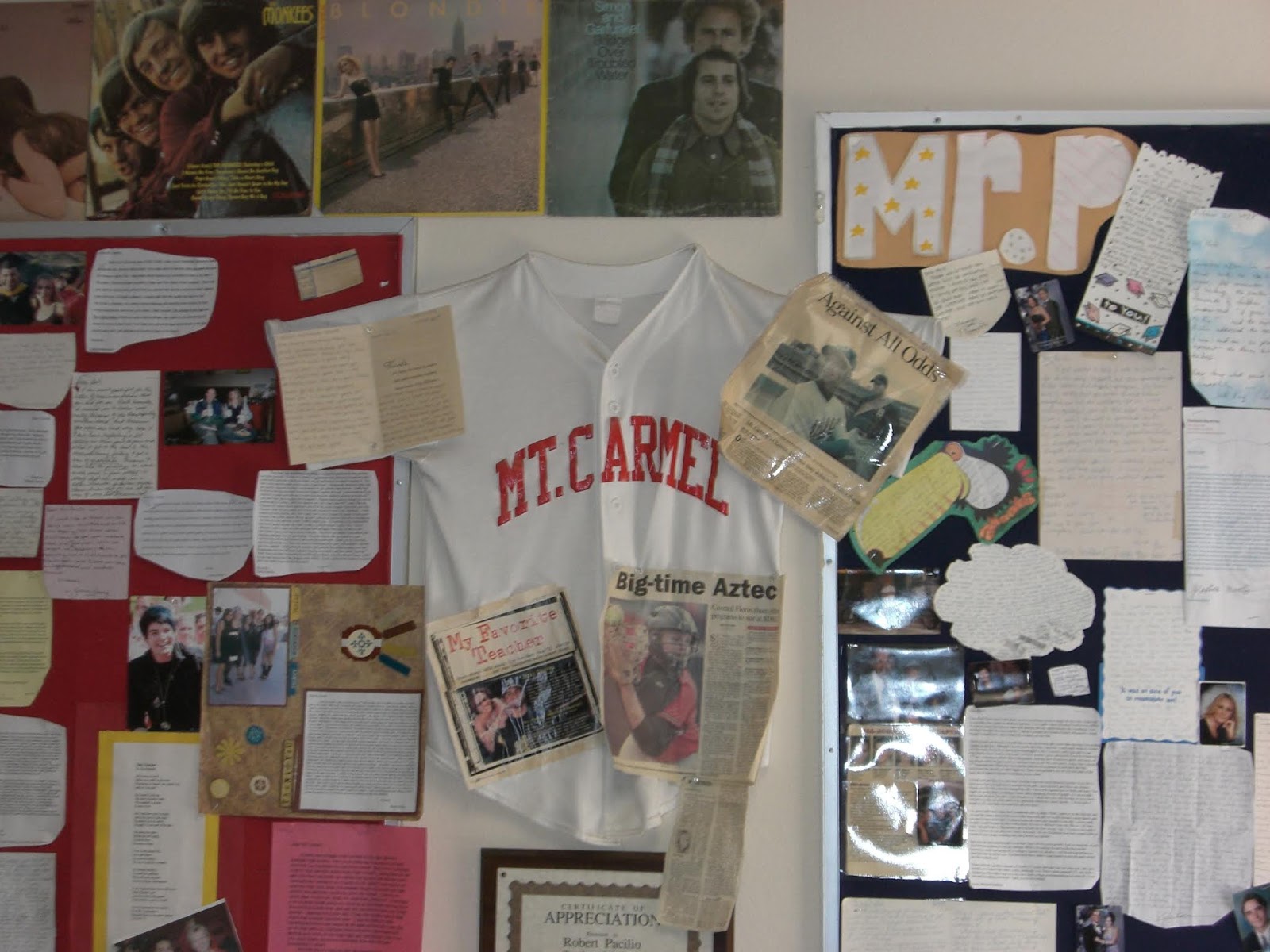
To all folks who understand the power of a civics teacher on a student’s mind. The words are Rich Clark, Mt. Carmel alumni:
“I remember the first day of 12th grade Civics class. I had Ms. Estelle Ricketson...her first words were, "Good morning, take your seats, close your mouth and open your mind. Someday, this class will make sense too you. Our constitution, the framework of our country, is the real textbook. I will teach you things that I hope never come to pass, but are essential to understanding how our country works."
Never, would I have thought that our country would be in this precarious position, in the midst of a constitutional crisis. But here we are. My first supervisor in the Air Force told me he makes it a point to read the constitution every year on his birthday. He did this as a reminder of why he wakes up every morning and puts on a uniform. I followed his sage advice. I hope you do too.
Today I would hope that the DOJ policy of not indicting a sitting president would be challenged in court. Why, it is unconstitutional. Why would I make this claim that the president is NOT immune from prosecution? It is in the constitution. Article II, section 4 states that The President, Vice President and all civil Officers of the United States, shall be removed from Office on Impeachment for, and Conviction of, Treason, Bribery, or other high Crimes and Misdemeanors.
How on earth could you have a conviction if a sitting president can't be indicted? The language is specific about the President and Vice President and includes other civil officers. If they are convicted they SHALL be removed from office on impeachment. Thank you Ms. Ricketson...I paid attention in your class.
Moreover, we are seeing an abuse of power in the executive branch that is creating the crisis at hand. Although the words, "separation of powers" aren't used in the constitution, the framework is laid out to keep each branch in check by the other two branches. John Kingdon a political science professor at the University of Michigan gives us the idea that, "its complexity as one of the reasons for lower citizen participation." The complexity of the separation of powers is what gives ordinary people the power and responsibility to influence any of the three branches of government. This my friends, is what truly makes our country great. Not a country that throws its weight around on a world stage, not a country that makes it nearly impossible to legally immigrate into, not a country where a President is completely unclear in their motivation and vision.

George Washington, when he was 16, wrote the Rules of Civility, quite a list for a 16-year-old. President Trump should read them as sage advice from the original predecessor of the office which he now holds.
The evidence that we have seen is clear, and more will come from the Special Counsel Report. The President does not value the constitution in the same light as you and I. In his book, The Art of The Deal, he implies the he has crafted his businesses around the premise that if it fails, so what, I have hedged my bets and will profit from the failure, just not as much. Unfortunately, Mr. President, the “Board of Directors” of your “Company,” We the People, don’t see it that way.
What we see is a man who has an insatiable hunger for power. A man willing to shatter the very document that formed our country, a man willing to do anything for power, whether real or perceived. My dear friends and patriots, it is now time to look at the document that declared us free from the tyranny of England and, King George III. “When in the course of human events…” It is the second thing I read on my birthday. I yield the balance of my time….”

Monday, February 11, 2019

To all Teachers and Music Lovers: Music at the Grammy's Provide Teachable Moments

Teachers used to ask me this: How do you know about the music that kids listen to?
The truth is that they are asking the wrong question. The question really should be: What kind of music speaks to the soul of all human beings...not just "kids?"
My former students were not 'kids'--they were beginning their journey and they are looking for answers to life's pressing "storms"--and adolescence is the hurricane that often blew them away. They looked for a foothold, for someone to steady them, someone that they could admire. So at the last evening's Grammy Awards everyone should see two artists who provide shelter to the storm.
At the Grammys, Kacey Musgraves song "Rainbow" is an extended metaphor, and its chorus about the inevitability of "storms" was eloquent and evocative. And it clearly a teachable moment. What are your student's rainbows and how do they face their storms? These two questions can be shaped into an artistic project, with written answers, to the colors of their rainbow.
The Grammy's also displayed the essence of compassion for the marginalized in Brandi Carlile's song "The Joke." Here is what NPR wrote of the song: ""The Joke" exemplifies the album's massive ambition. A country-rock aria dedicated to the delicate boys and striving girls born into — and, Carlile insists, destined to triumph over — this divisive time, "The Joke" offers a stunning vocal performance from Carlile,
"'The Joke'... reflects the compassion she has developed as a seasoned artist, parent and activist." [Carlile explains,] "'There are so many people feeling misrepresented [today],' she said. 'So many people feeling unloved. Boys feeling marginalized and forced into these kind of awkward shapes of masculinity that they do or don't belong in... so many men and boys are trans or disabled or shy. Little girls who got so excited for the last election, and are dealing with the fallout. The song is just for people that feel under-represented, unloved or illegal.'"

Naturally, their are other wonderful songs that the Grammy's featured, but for my energy, these two were music to my ears.

Saturday, February 2, 2019

TO ALL TEACHERS: A 2019 Halftime Pep Talk


My 28,000 one hour shows equal 5,000 kids in the audience over a 32 year high school teaching career. The playing field—aka, my classroom from  1977 to 2010. It was a great ride! We had many winning seasons. Really. I mean it. Never a perfect, undefeated season, but always in the hunt, always finishing with a winning record.

What was the magic trick? The secret? The ace up my sleeve? We will get to that shortly but first, gather around, huddle up, it’s halftime and it’s time to have a serious gut check.

Ah, I can see the doubters out there—the teachers for whom the burdens of teaching have set you into a cynical spiral of despair. You’re down, and it’s only the half way point of the year. Your classroom seems like “Groundhog Day” (the movie) in which things that drag you down are repeated over and over.

Let’s make a list: unruly kids; way too many of them; lack of supplies; tepid admin support; parents who either don’t care, don’t want to know what’s wrong with their children—or worse, they ask you what to do!

Have I touched on some of your problems? I bet I have. But let’s not forget these mind numbing fumbles: the paycheck is dismal at best; the curriculum you are told to teach is boring, not just to the kids but to you, as well. One more thing. You have no social life, no money for one, and no idea how to get out of this funk.

Is that what’s ailing you? Yes, I know. I just caused you to cry. “Are you crying? Are you crying?
There’s no crying”… in teaching. (Okay, you can cry a little: but there is no crying in baseball). Now wipe away the tears, and as they say “Huddle up and listen.”

What makes a great teacher? I’ll tell you what. Endurance. Curiosity. Compassion. Selflessness. faith that you have something to offer those kids every single day. Ask yourself if that is what you are out there playing for? Are those qualities the ones you value, not just as a teacher, but are those the qualities you are teaching kids?
Humor. A solid work ethic. And the most important element—

That’s right. I just identified the real ‘Lesson Plans.’ You don’t teach to a test. You are the test. You set the goal. You emulate the skills that you want them to begin to value and someday maybe master.

Let me add one important quality that I implied: patience. Malcolm Gladwell (if you don’t know who he is, then you are not paying attention to the way we learn) argues it takes 10,000  hours of productive practice to master anything; a musical instrument, a sports game, the act of public speaking, and on and on. 

So, for all you young guns out there teaching: patience, endurance. It’s going to take a while to learn the art that is teaching. Each year is a marathon, and summer is when you collapse at the finish line (or try to, if you’ve saved enough money…more on that later).

So what to do? Teach them to sing. To dance. To listen. To create with their hands or finger tips. Whatever you do—you do it first and preferably with them. Show them that it’s doable. Heck, you were once a student and you did it. They can, too. Go watch “Dead Poets Society” or “Stand and Deliver” or “To Sir with Love”—break the mold. Go read my novel “Meetings at the Metaphor Café.” (I don’t mean to shamelessly plug my book, really).

I found lots of teachers who felt they hated what they were teaching. Take WWI, for example. Boring? Really? The gas used in that war is much like what Assad used on his Syrian people. It’s what Saddam Hussein used on the Kurdish citizens to keep control. It’s the weapon of choice for dictators. Ask the kids what we, as Americans, should do about it? And how different is that, really, when it comes to knowingly allowing drinking water in Flint, Michigan to be poisoned with lead? Get them pissed off. Remember, the sins of the past will repeat if you, their teacher, do not help your students to learn from the mistakes of our elders.

That’s your job. Your job is to get them to rise up. To ascend to a high level of thinking, of competence, of humanity. That is so not boring. And if you are not flying out of this huddle fired up to make a difference, then you may not belong in this arena. 50% of teachers can’t cut it and quit after less than five years. But if you have been reading this far into my pep talk, I’m betting you are not a quitter. I’m betting that you give a damn about most, if not all, of your kids.

I know the pay sucks. But stick together. Unions made the difference for me. We took pay cuts for medical coverage to kick in after we retired until 65. That was very ‘Union’ smart. We had to save for retirement, and those pensions that teachers have are golden—just ask folks in the private sector about that. You are a professional, so keep fighting for that profession. Those who can’t teach often don’t have the patience, the selflessness, the vision of a bigger picture, the persistence to get something right. They may have more money, but let me tell you, the Beatles got it right, “Money can’t buy you love.”

And when this season is over, when the scoreboard says you have won more than you lost, when the  kids start meandering out of your classroom—that’s when you will notice that ‘Thank You’ note left on your desk that reads “You don’t know how much it meant to me  when you ran out to the parking lot to ask me if I was ‘okay’. It mattered a lot.”

So, after the Super Bowl, the season really begins anew.

To quote John Keating, “What will your verse be?”

Monday, January 7, 2019

To “Like”—Just a “Click”Away, But Is Skin in the Game?


Last election I did not just click “Like.” For the first time (and I must add that I am retired from the 9-5 job), I participated. I’m not trying to elevate myself as something grand or bold. I merely exercised my citizenship. I got out there and phone banked, went to meetings, blogged my views, paid my dues (in cash), and really got behind Mike Levin for Congress.

Boy, was I on pins and needles on election night! This time it mattered personally. Mike won. But the real winners were the folks who set records for protesting at Mr. Issa’s office—rain or shine—every Tuesday. The real winners were those who step up to the plate, in whatever means they have, to make a difference.
Who else stepped up? John McCain did so famously by putting his thumb down and saving the Affordable Care Act. 

Dr. Christine Ford stepped up to the cameras and told the nation what happened to her, with nothing to gain (but self respect) and everything to lose. One succeeded and one failed…on paper that is.

Atticus Finch said that “Courage is when you know you’re licked before you begin, but you do it anyway…you rarely win, sometimes you do….” It’s not always about whether you win or lose, but it is the principle at stake. I don’t know if I have that kind of courage—to sing my song and thus attract the attention of those “hunters’ out there. But I thought that this time I was not just going to sit out another election and shake my head at the folly of our politicians.

This brings me to my point. It is easy to click like…or love…or tag on an emoji (I’m not an emoji guy), but it matters so much more to respond. It can be with words, but it is better with deeds. These actions are based on values that are not heroic—they are American. Selflessness. Concern for others. Listening to the facts.  All are noble, but all must be followed with some action. That’s what Alan Sorkin’s new adaptation of “To Kill a Mockingbird” argues for. And I for one, applaud him.


So thanks to all who step up. We have much to do to reset our ship of state back on course.  

And as an aside, thanks to the 1,673 people who "viewed" my blog about my newest novel “Meet Me at Moonlight Beach” and the 100's who "liked"it...it’s available on Amazon (just a click away), and I am speaking around town—this Wednesday 1/9/2019 at the Second Chance Brewery in Carmel Mt. Ranch from 5-7pm. Support this fine local brewery that has graciously waived fees to have me there. 

Oh, and thanks to the Assistance League of Rancho San Dieguito for their support of my novel in December. Now there’s a group that steps up to help those in need. Bravo, Ladies.

Thursday, December 27, 2018

New Year's Wish: Americans Need Four Walls…and a Roof!

$21 million is needed to help the poor citizens of what formerly was Paradise, California. At least
that’s the amount estimated by organizations in California. Sounds pretty low, doesn’t it? CAL FIRE estimates 7,500 homes were damaged or destroyed.

If one watches the news, the ‘tent city’ at WalMart looks like an REI covered football field, and after Thanksgiving they were told to move.  This does not include all the businesses destroyed or made bankrupt by what is essentially a modern day ghost town created by a firestorm of epic proportions. 

And that’s just one of the two fires that hit California in November.

Then there is the flooding in central Texas, not to mention the tornadoes. USA Today reports: “Severe storms roared across the Deep South late Wednesday and early Thursday, leaving two people 
dead and about 100,000 homes and businesses powerless.”

So I keep wondering about what America can do to help with the unfortunate victims of the ‘new normal’ —a continuous, severe climate change?


I know one thing for sure; this nation has the financial
resources to put people who are sitting chilled to the bone under a nylon tent in a room; whether it is a hotel, motel or some form of temporary housing. But that is not happening. People’s insurance money is either running out or never was purchased to cover this type of disaster. Extended families are helping if they can.

How do I know we have the funds? Pretty simple. $5 billion for ‘a wall’ is Mr. Trump’s idea of security, and no one seems to doubt the money is there. Democrats have countered with perhaps $1 billion to upgrade border security, but not ‘a wall.’ A billion dollars. Sometimes we forget what that amounts to: 1,000,000,000.

And I ask, isn’t the fundamental to the oath of office many federal government officials take: “to preserve and protect”—not just The Constitution, but the citizens of this nation made homeless through no fault of their own?

Certainly, the individual state’s capacity is limited, and each state has spent millions on fire fighting and flood relief. Fires and floods know no State or County borders. It’s time for the Federal Government to step up. Instead, the Federal Government is shut down. 

The commendable efforts of thousands of breweries who have supported Serra Nevada Beer will
have raised hundreds of thousands of dollars, but that is a drop in the barrel, so to speak.

I care so much more about Americans in desperate need, than ‘a wall’ of dubious need.  Putting “America First” means setting priorities to help Americans—especially those who are displaced, deserted, and soon to be forgotten as the New Year approaches.

I do not mean to denigrate the needs of those racing away from the violence south of our border, but let us be sure that our nation, in which they seek asylum, is one that gives hope and security to its own citizens.